
Table of Contents
Why Look for a Quicken Simplifi Alternative?
Quicken Simplifi has plenty of fans, and it’s easy to see why – clean interface, solid reporting, a genuinely useful cash flow forecast. But Quicken’s flagship app isn’t for everyone, and one limitation is simple: there’s no free tier. You get a trial, and once that clock runs out, you’re on the subscription, or you’re out. For anyone who wants to actually try a Quicken product for a few weeks before committing to a paid subscription and trusting it with their bank logins, that’s a rough starting point.
It’s not just the price, either. Quicken built Simplifi around one model – its “Spending Plan” – which works well if forward-looking cash flow is what you’re after, but may feel less natural if you prefer a more hands-on envelope-budgeting or zero-based-budgeting approach. And even though Quicken Simplifi connects to over 14,000 institutions, connection availability and reliability can vary by financial institution, so some users may still experience syncing issues with smaller credit unions or regional banks.
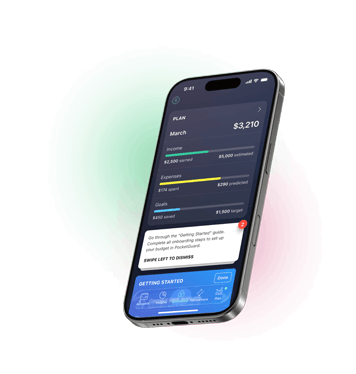
Take control of your money, optimize your spending and grow your savings automatically


So if you’ve typed “Quicken alternative” into Google recently – or “alternative to Quicken,” or “best Quicken alternative” – you’re in good company. Here’s where that search may lead, starting with the app we think is a strong alternative to Quicken Simplifi for everyday budgeting: PocketGuard.
Key takeaways
- PocketGuard predictive budgeting app is a strong Quicken Simplifi alternative that has a one-time lifetime plan for $149.99. Simplifi, Monarch, YNAB, and Copilot are subscription-only.
- PocketGuard connects to 18,000+ institutions, compared with Simplifi’s 14,000+. It supports zero-based, envelope, category, and 50/30/20 rule budgeting, and provides you with powerful personal finance insights and debt payoff tools.
- Quicken Simplifi is still better for deep investment analytics, retirement planning, and tax reports.
- If you want to replace Quicken with something simpler for daily spending, choose PocketGuard. Try Monarch for investments.
PocketGuard – a strong Quicken Simplifi alternative for everyday budgeting
PocketGuard budget app is more than a personal financial planner. While Quicken Simplifi gives you a 12-month forecast, PocketGuard gives you one number: how much you can safely spend right now, after bills, goals, and savings are already accounted for. If you’ve ever opened a budgeting app looking for a quick answer and instead got a wall of charts, you’ll understand why that matters.
A few things it does differently:
- Pay once and be done. PocketGuard currently offers a lifetime plan instead of the usual monthly bill – something Quicken doesn’t offer with Simplifi. If subscriptions have been quietly piling up, this alone might be worth switching over.
- It tells you where you stand today, every day. The Leftover number and spending-pace tracking are built for right-now decisions.
- The cash flow view is refreshingly honest. You get actual monthly income versus expenses, split between recurring and variable spending, with a trend line you can trust.
- It covers more banks. 18,000+ institutions versus Simplifi’s 14,000+ – which matters if you bank somewhere smaller.
- Flexible budgeting options. PocketGuard offers different ways to organize and manage your budget, including zero-based, envelope, and category-based approaches.
- There’s a real debt payoff planner. Snowball or avalanche, built right in. PocketGuard helps users organize their debt repayment strategy and estimate their payoff timeline.
To be fair, Quicken still wins in a few places. Simplifi’s 12-month Projected Cash Flow is more detailed. Its investment analytics go deep (TWR and IRR, not just balances), it has real retirement scenario planning, and its tax reports are genuinely useful come April. If those matter more than daily spending clarity, don’t cross it off your list yet.
How PocketGuard compares to Quicken
Think of it this way: Quicken is for people who want to see where their money is headed. PocketGuard is for people who want to know, right now, whether they can afford dinner out tonight and stop overspending. Both are legitimate – you just have to know which problem you’re solving.
Is there a free tier alternative
If you’re hoping for a free Quicken Simplifi alternative, a quick reality check: none of the major players here – not Monarch, not YNAB, not Copilot, not even PocketGuard – give you a full-featured free plan forever. PocketGuard offers a free trial, giving users an opportunity to explore its features before committing to a paid plan.
Pricing
PocketGuard Plus costs $12.99 a month, or $74.99 a year – roughly in line with Quicken Simplifi’s $3.99/month rate for new subscribers, billed annually as a sigle payment $47,88. The renewal will cost you $83,88 a year. The real difference shows up with PocketGuard’s lifetime option: pay $149.99 once, and you’re done, period. If you already know you’ll be using a budgeting app three or four years from now, that math looks pretty good next to Simplifi’s ongoing subscription.
Who PocketGuard is best for
If you tend to overspend, live close to the edge some months, or just want one clear answer on top of the dashboard full of numbers, PocketGuard was built with you in mind. Debt.com’s 2026 Budgeting Survey found that 48% of Americans live paycheck to paycheck. Among people who don’t budget, 34% say it’s too time-consuming, and that’s the problem a single Leftover number solves. Try it free for 7 days and see your own Leftover number.
A few other Quicken Simplifi alternatives worth knowing
PocketGuard won’t fit everyone, and that’s fine – here’s who else is worth a look.
Monarch – Best for investment tracking & customization
Monarch feels built for couples who want budgeting, net worth, and investments in one shared view. It connects to 13,000+ institutions, doesn’t charge extra to add a partner, and its Plus tier layers in retirement forecasting and Morningstar-backed fund analysis. That runs $16.67 a month or $199.99 a year, with a 7-day trial and no free plan to fall back on.
YNAB – for hands-on zero-based budgeting
YNAB is for the person who wants to sit down and give every dollar a job before it gets spent – more manual than Quicken Simplifi’s automated spending plan, but that’s the appeal for a certain kind of budgeter. Debt payoff and savings goals are handled well. It runs $14.99 a month or $109 a year, with a generous 34-day trial but no permanent free tier.
Copilot Money – a design-forward option for Apple users
Copilot is gorgeous, and it knows it. Built almost entirely for Apple – iPhone, iPad, Mac, Apple Watch, and Web, but does not have a native Android app – it leans on AI to auto-categorize spending without much manual cleanup. Net worth and investment views are a strong point. Pricing is $18 a month or $109 a year, with a 30-day trial and, like everyone else here, no free plan.
Quicken Simplifi Alternatives Compared
| App | Budgeting Method | Pricing Model | Free Tier | Bank Coverage | Cash Flow View | Investment Reporting | Debt Payoff Tools | Ease of Use | Security |
| PocketGuard | Zero-based, envelope, category, 50/30/20 rule | Subscription or lifetime | free 7-day trial | 18,000+ | Real-time monthly chart | Basic | Snowball & avalanche planner | Very simple, one-number focus | Bank-level encryption |
| Quicken Simplifi | Single spending plan | Subscription only | 30-day money-back guarantee | 14,000+ | 12-month projected cash flow | Deep (TWR, IRR) | Debt tracking and AI-assisted payoff strategies | Moderate learning curve | Bank-level encryption |
| Monarch | Flexible/customizable | Subscription only | 7-day trial only | 13,000+ | Forecasting (Plus tier) | Strong, Morningstar-powered | Basic | Moderate, dashboard-heavy | Bank-level encryption |
| YNAB | Zero-based (manual) | Subscription only | 34-day trial only | 12,000+ | Not a core focus | Basic | Strong, loan calculator | Steeper learning curve | Bank-level encryption |
| Copilot | Category-based, AI-assisted | Subscription only | 30-day trial only | 16,000+ | Basic | Strong for net worth | Basic | Very polished, Apple-focused | Bank-level encryption |
Why PocketGuard is worth checking out
It comes down to what you need from the app you check most mornings. Quicken Simplifi is a solid forecasting tool, no argument there. But PocketGuard gives you a clearer daily number, more budgeting flexibility, an actual debt payoff plan, wider bank coverage, and – unlike Simplifi or anything else here – a way to stop paying eventually. If you’ve been quietly Googling apps like Quicken because you want something simpler to live with day to day, start here. Register and start your free trial today.
Want the full breakdown, feature by feature? Read our PocketGuard vs. Quicken Simplifi comparison.
Quicken Simplifi Alternatives FAQ
Is there a free alternative to Quicken Simplifi?
Not entirely, no. Quicken’s Simplifi doesn’t offer a permanent free plan or a standard free trial. However, eligible purchases come with a 30-day money-back guarantee, and honestly, PocketGuard, Monarch, YNAB, and Copilot are in the same boat; none offer a truly unlimited free plan. PocketGuard’s free trial plus its low-cost lifetime option come closest to a “pay once, use forever” alternative to Quicken.
Does PocketGuard track investments like Simplifi?
It’ll show your linked investment balances as part of the bigger picture, but it won’t match Quicken Simplifi’s deeper analytics – things like time-weighted return or internal rate of return. If investment reporting is what you care about most, Quicken or Monarch will serve you better. If you’re more focused on daily spending and getting out of debt, PocketGuard is the stronger choice.
What’s simpler to use than Quicken Simplifi?
PocketGuard, hands down. Its Leftover feature gives you one number – how much you can spend right now without requiring you to navigate multiple reports. It’s a good fit for building Dave Ramsey–style, zero-based budgeting habits, or for anyone new to household finance who doesn’t want to learn a whole system on day one.
Disclaimer: This content reflects information available at the time of publication. Prices, policies, features, and other details may have changed since then. Please check the latest information with official sources before making any decisions.
Take control of your money, optimize your spending and grow your savings automatically
