
You Need a Budget (YNAB) built its reputation on the zero-based envelope method: assign every dollar a job at the start of the month, then track each purchase against that plan. It works, but it may ask a lot of the user. YNAB’s annual plan now runs $109 a year, or $14.99 a month, and the method itself requires regular, hands-on category management. Miss a few days of logging and the budget may stop matching the bank account. Those two frictions — cost and manual upkeep — could be the main reasons people start searching for a YNAB alternative.
This guide compares the best YNAB alternatives for 2026: PocketGuard, Monarch, Goodbudget, and Copilot Money. To rank them, we looked at each app’s current pricing page, the length and terms of its free trial (if any), how much manual entry it requires day-to-day, and whether it covers the features YNAB users rely on most — debt payoff tracking and savings goals. We also checked how each app connects to your bank, since that’s a fair proxy for how much daily maintenance it will actually ask of you, and whether its stated data policy holds up (does it sell data, serve ads, or stay subscription-only).
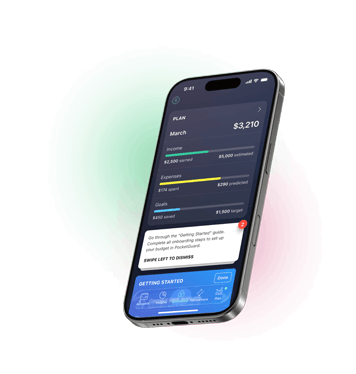
Take control of your money, optimize your spending and grow your savings automatically


None of the four apps below are identical replacements for YNAB — they solve the same underlying problem (knowing what’s safe to spend) in different ways. If you mainly want less manual work, PocketGuard and Copilot Money may be the closer fit. If you want to keep YNAB’s category discipline but stop paying for it, Goodbudget may be the direct swap. If your budgeting has outgrown monthly cash flow and you’re now thinking about net worth, Monarch may be worth the higher price.
Table of Contents
Best YNAB Alternative at a Glance
For a lot of people replacing YNAB, PocketGuard may be the strongest pick. Instead of asking you to plan every category upfront, it links to your accounts, subtracts your bills and goals from your income, and shows you a single “Leftover” number — what you may spend right now. If you want the awareness YNAB gives you without the weekly category maintenance, PocketGuard may be the closest match.
PocketGuard: Best for Automated, Low-Effort Budgeting
PocketGuard is built for people who want a clear spending limit without doing the monthly setup work. You connect your accounts, and the app does the math for you. YNAB asks users to fund a category for every kind of spending before the month starts, then log each transaction against it. PocketGuard instead looks at what’s actually in your accounts. For people who don’t want to forecast every dollar in advance, that may be a more forgiving system — and it’s the core reason PocketGuard shows up first on many lists of alternatives to YNAB.
How PocketGuard’s “Leftover” Algorithm Works
PocketGuard’s home screen runs on what it calls the Leftover number. The app pulls in your income and recurring bills, nets one against the other, and displays what’s left to spend. It also spreads irregular costs — a twice-yearly insurance premium, for example — into smaller monthly set-asides, so a big bill doesn’t blindside you later. PocketGuard is a predictive budgeting tool that shows you not only how much money you’ve spent, but also how much you will have by the end of the year.
The number updates as your accounts change: pay a bill, and it drops; get paid, and it rises. There’s no need to rebuild a budget from scratch each week, which is the main practical difference from YNAB’s category-by-category approach.
Automation vs. Manual Budgeting
YNAB is manual by design. You enter transactions, assign them to categories, and reconcile accounts yourself. That is exactly the discipline some budgeters want, but it’s also the part most people cite as burnout when they go looking for YNAB competitors. PocketGuard syncs transactions automatically with categories already assigned by your bank’s data provider. You can correct or split it if needed, but you’re not required to enter anything by hand. That doesn’t mean less control — you can still set custom category limits and move money around — it just means the app does the bookkeeping instead of you, which cuts down on the manual data entry YNAB requires.
Key Features That Replace What You’d Miss From YNAB
The features people rely on in YNAB have rough equivalents here:
- Category funding → Category limits. Instead of funding an envelope, you set a cap (say, $300 for groceries) and get warned as you approach it.
- Age of Money/awareness → the Leftover number. Rather than checking several categories, you check one number before a purchase.
- Goal tracking. You name a goal, set an amount and a deadline, and the app sets aside funds automatically, similar in spirit to YNAB’s goal categories but without manual monthly funding.
- Debt tracking. Balances, interest rates, and payoff timelines are visible in one place, similar to YNAB’s debt tools.
Debt Payoff and Savings Goals
PocketGuard treats savings goals and debt payments the same way it treats bills: it folds them into the Leftover calculation, so you’re not choosing between saving and paying down debt — the app accounts for both before showing you what’s free to spend. You can run several goals at once (an emergency fund, a vacation, a big purchase) and pause any of them for a month if money is tight.
On the debt side, PocketGuard pulls in your loans and credit cards and lets you sort them by balance or interest rate, then models how extra payments shift your payoff date — useful if you’re weighing the avalanche method against the snowball method and want to see the timeline for each before committing. YNAB has a comparable debt payoff calculator, but you have to open it separately from your monthly budget; in PocketGuard, debt payments are already part of the same Leftover number you check for everyday spending decisions.
How PocketGuard Connects to Your Bank
PocketGuard links accounts through Plaid and Finicity — the same data-connection providers used by Monarch and most other budgeting apps — plus Apple Wallet. Access is read-only, meaning the app can view balances and transactions but can’t move money or change account details. On top of that, PocketGuard uses 256-bit SSL/AES encryption for data in transit, the same standard used by banks, and adds a PIN code, biometric login, and multi-factor authentication as a second layer on the app itself. That’s a reasonable baseline; it’s worth comparing against how Monarch and Goodbudget handle the same question in the sections below.
Is PocketGuard Cheaper Than YNAB?
Here’s where the comparison needs an update from older reviews. PocketGuard used to offer a genuinely free, indefinite plan, which was its biggest edge over YNAB. As of 2026, that free tier is gone: new users get a 7-day trial before PocketGuard Plus kicks in at $12.99 a month or $74.99 a year (about $6.25/month), with a lifetime option also available in-app.
That still comes out cheaper than YNAB on a straight annual comparison — $74.99 versus $109 a year — and YNAB’s trial is longer at 34 days. But if a permanent free plan is the deciding factor for you, PocketGuard is no longer it; Goodbudget is (see below).
Who PocketGuard Is Best For
PocketGuard suits beginners, busy people, and anyone who found YNAB’s category system more upkeep than they wanted. It also works well for couples, since both partners can view the same Leftover number instead of debating whether a purchase fits the budget, and for freelancers whose income and bills are irregular from month to month. If that sounds like your situation, you can start a free trial and see how it compares to your current YNAB categories.
Other YNAB Alternatives Worth Considering
PocketGuard isn’t the only reasonable YNAB alternative — it’s just the best fit for people who want automation over investment tracking or a free envelope system. Here are three other budgeting apps worth a look, and how each differs from You Need a Budget.
Monarch — for All-in-One Net Worth & Investment Tracking
Monarch pairs budgeting with net worth and investment tracking, connecting to bank, investment, and property accounts to show your full financial picture over time. Where YNAB is focused on monthly cash flow, Monarch is built for people past that stage who want to watch their 401(k), home equity, and brokerage accounts alongside everyday spending.
Monarch costs $199 a year (16.58/month), with a 7-day trial and no permanent free plan. A higher Plus tier adds retirement forecasting and small-business tracking for $16.67/month. It has a moderate learning curve — expect to spend some time connecting accounts and reading reports — so it’s better suited to wealth-building than to someone who just wants a quick answer on what’s safe to spend on groceries this week.
Monarch is SOC 2 Type 2 certified and connects accounts through Plaid, Finicity, or MX, whichever gives the most reliable connection to your specific bank. It states plainly that it doesn’t sell financial data or run ads, which matters if you’re moving away from YNAB partly out of frustration with subscription pricing but don’t want to trade cost for a data-selling model instead.
Goodbudget — Free Envelope-Method Alternative
Goodbudget is the closest thing here to a genuine free YNAB alternative. It uses the same digital-envelope logic YNAB is built on: you divide money into categories at the start of the month and stop spending once an envelope is empty.
The free plan includes 20 envelopes, one account, and one year of transaction history — enough for someone with a simple setup, though it requires manual transaction entry since bank sync is a paid feature. Goodbudget Premium, at $10 a month or $80 a year, adds automatic U.S. bank sync, unlimited envelopes and accounts, five-device syncing, and seven years of history. For people who like the envelope method but don’t want YNAB’s price tag, Goodbudget keeps that spirit alive at no cost.
Goodbudget is run by Dayspring Technologies, a bootstrapped company that has operated the product since 2009 (it started life as EEBA before rebranding). That long, self-funded history is part of why the free tier has stayed stable. The trade-off for staying small is fewer automation features overall: even on Premium, Goodbudget doesn’t offer investment tracking or the kind of categorization PocketGuard and Copilot Money use. Budgeting still relies on your own category discipline rather than the app doing the work.
Copilot Money — for AI-Categorized, Design-Forward Tracking
Copilot Money launched in 2020 and has since become one of the more polished budgeting apps on iPhone, iPad, Mac, and the web, with AI handling most of the categorization work. It’s less rigid than YNAB’s category structure and puts more emphasis on design and automatic subscription tracking — it flags recurring charges and price hikes before they catch you off guard.
Copilot Money costs $18 a month or $119 a year (currently there is a promo: $109 a year), with roughly a month-long trial and no permanent free tier. It currently supports U.S. financial institutions only, which is worth knowing if you bank internationally.
Copilot Money is built Apple-first — iPhone, iPad, Mac, and now a web app — and its FAQ states it doesn’t sell financial data or carry ads, similar to Monarch’s positioning. Beyond categorization, it includes a conversational “Money Assistant” you can ask questions like “how much did I spend on restaurants last month,” which is a genuinely different interaction model than either YNAB’s category grid or PocketGuard’s single Leftover number. It’s also picked up an Apple Design Award nomination and holds a 4.8-star App Store rating across tens of thousands of reviews, which is a reasonable signal of day-to-day usability even if it doesn’t tell you anything about whether the budgeting method fits your habits.
Switching From YNAB: What to Expect
None of these apps import a YNAB budget directly — YNAB doesn’t offer an official export format that other budgeting apps read natively, so plan on a short rebuild rather than a one-click migration. In practice, this takes less time than it sounds. Plan on about an hour to set up the new app and a week or two of overlap.
- Export your transaction history first. YNAB lets you export each budget as a CSV from Account Settings, which most of these apps (Goodbudget included) can then import for historical reference, even though it won’t recreate your category structure.
- Expect a short double-tracking period. Running YNAB and your new app side by side for a week or two is the easiest way to confirm balances match before you cancel the old subscription.
- Rebuild categories loosely, not exactly. Trying to recreate every YNAB category by hand in PocketGuard or Copilot Money defeats the point of switching to an automated app — start with three or four spending caps and adjust as you see real data.
- Cancel YNAB on your renewal date, not before. Check YNAB’s refund policy before canceling mid-cycle.
YNAB Alternatives Comparison
| Feature | PocketGuard | Monarch | Goodbudget | Copilot Money |
| Budgeting Method | Leftover, 50/30/20,zero-based, envelopes, category budgeting | Category budgeting + net worth tracking | Digital envelope method | AI-categorized tracking |
| Price | $74.99/yr or $12.99/mo | $99.99/yr or $14.99/mo | Free; Premium $80/yr or $10/mo | $95/yr or $13/mo |
| Free Trial | 7 days (no permanent free plan) | 7 days (no permanent free plan) | Free plan available indefinitely | ~1 month (no permanent free plan) |
| Learning Curve | Low | Medium | Low | Low |
| Ease of Use | Very easy | Moderate | Easy | Very easy |
| Automatic Bank Sync | Yes | Yes | Paid plan only | Yes |
| Manual Entry | Optional | Optional | Required on free plan | Optional |
| Debt Tools | Yes | Yes | Limited | Basic |
| Savings Goals | Yes | Yes | Yes | Yes |
| Security | Bank-level encryption | Bank-level encryption | Bank-level encryption | Bank-level encryption |
| Net Worth / Investment Tracking | Basic | Advanced | No | Moderate |
PocketGuard suits people who want automation at a lower price than YNAB. Monarch fits investors who want a full net-worth view. Goodbudget is the strongest free YNAB alternative for envelope budgeters. Copilot Money offers the most polished design and the strongest AI categorization.
Why PocketGuard Is the Best YNAB Alternative
Of the four, PocketGuard offers the most balanced mix of automation, price, and simplicity — closer to YNAB in spirit than the others, and considerably less work to maintain day-to-day. Setup takes minutes: link your accounts, set a few goals, and the Leftover number starts working immediately, with none of YNAB’s onboarding curve. If you’d like a closer look at the category-versus-Leftover difference first, our PocketGuard vs YNAB comparison walks through it in detail. When you’re ready, start your 7-day free trial and see how the Leftover number fits your spending.
YNAB Alternatives FAQs
What’s the best free alternative to YNAB?
Goodbudget is the best truly free YNAB alternative — its free plan includes 20 envelopes and a year of history with no time limit. PocketGuard no longer has a permanent free tier; it now offers a 7-day trial before its paid plan starts.
How is PocketGuard different from YNAB?
PocketGuard automates the math YNAB asks you to do by hand. Instead of assigning every dollar to a category upfront, it nets your income against bills and goals and shows one Leftover number, giving you similar awareness with far less weekly upkeep.
What are the drawbacks of YNAB?
YNAB costs $109 a year, requires disciplined manual entry, and has a real learning curve. If you fall behind on categorizing transactions, the budget drifts from your actual bank balance — the main reason people look for YNAB competitors in the first place.
What’s easier to use than YNAB?
PocketGuard and Copilot Money are both easier to use than YNAB, thanks to automatic bank sync and minimal setup. Between the two, PocketGuard has the price edge for anyone testing whether easy budgeting apps can replace YNAB’s manual method.
Is it safe to link my bank account to a YNAB alternative?
Yes, if the app uses an established connector. PocketGuard, Monarch, and Copilot Money all link through Plaid or Finicity, with read-only access and bank-level encryption — none of them can move money or see your login credentials directly.
Can I import my YNAB budget into PocketGuard or Monarch?
Not directly. You can export your YNAB transaction history as a CSV and import it for reference, but you’ll need to rebuild your category structure manually, since none of these apps read YNAB’s native budget format.
Disclaimer: This content reflects information available at the time of publication. Prices, policies, features, and other details may have changed since then. Please check the latest information with official sources before making any decisions.

Take control of your money, optimize your spending and grow your savings automatically

